Health Library
Expert-reviewed articles on headache types, triggers, treatments, and wellness. Your go-to resource for understanding and managing head pain.
Featured
Tension Headache vs. Migraine: Key Differences
Understanding the key differences between tension headaches and migraines can help you find the right treatment faster.
Read Article
Food Triggers: A Complete Guide to Dietary Headaches
Certain foods and drinks can trigger headaches and migraines. Learn which ones to watch for and how to identify your personal triggers.
Read Article
Acute vs. Preventive Migraine Treatment Approaches
Should you manage headaches when they happen or work to prevent them? Learn about both approaches and when each is right for you.
Read Article
Cold Plunges, Saunas, and Migraine: Health Trend or Hidden Trigger?
Cold plunges and sauna circuits are popular in 2026, but sudden temperature shifts can be intense for people with migraine. Learn what the evidence supports and how to reduce risk.
Read Article
Can Migraine Raise Your Blood Pressure? What’s Normal—and What Isn’t
Pain and stress can change a blood-pressure reading, but most mild or moderate hypertension does not explain a migraine. Learn when a reading is a migraine question and when it is an emergency.
Read Article
Migraine After 40: Why Attacks Can Change Suddenly
Migraine can become less frequent, more frequent, or simply different in midlife. Learn how hormones, sleep, medications, and new red flags shape the after-40 picture.
Read Article
Sex Headache or Migraine? When Sudden Pain Needs Emergency Care
Headache during sex can be benign, migraine-related, or a sign of a dangerous vascular problem. Learn why the first sudden episode should be evaluated urgently.
Read Article
Histamine and Migraine: Is Food Intolerance the Missing Piece—or a Misleading Label?
Histamine can appear in migraine research and online food lists, but a restrictive diet is not automatically the answer. Learn what the evidence supports and how to test a pattern safely.
Read Article
Low Blood Sugar or Migraine? How to Tell What’s Really Happening
Skipping meals can overlap with migraine, fasting headache, and low blood glucose symptoms. Learn what to track before blaming glucose or cutting foods unnecessarily.
Read Article
Is Your Morning Headache Really Sleep Apnea? Clues Beyond Snoring
Morning headaches can occur with migraine, sleep disruption, dehydration, medication effects, or sleep apnea. Learn which clues justify a sleep evaluation.
Read Article
Can Migraines Damage Your Brain? What MRI Studies Actually Show
White spots on an MRI can be frightening, but they do not automatically mean migraine is damaging your brain. Learn what imaging studies show and when a scan is appropriate.
Read Article
Ozempic and Migraine: Could GLP-1 Drugs Help—or Trigger Headaches?
GLP-1 medicines are raising new questions for people with migraine. Learn what current research suggests, why headaches can occur, and what to track before changing treatment.
Read Article
Why Is My Migraine Treatment Failing? 9 Reasons to Revisit With Your Doctor
When migraine treatment stops helping, the answer may be timing, trial length, side effects, medication overuse, or a changing diagnosis. Here is a safer treatment audit to take to your clinician.
Read Article
Phantom Smells Before a Migraine: Is It an Olfactory Aura?
Smelling burning or smoke that isn't there, shortly before a migraine, is documented in the literature — though it is rare and, importantly, not formally classified as aura.
Read ArticleFace or Hand Tingling: Migraine Aura or a Medical Warning Sign?
Sensory aura spreads slowly; a stroke is usually maximal at onset. That difference is the most useful thing to know — and the least safe to rely on alone.
Read Article
Ear Pressure, Ringing, and Migraine: When It May Not Be an Ear Infection
Aural fullness is a documented feature of migraine attacks, reported by a quarter to a third of people. It is a common reason for repeated, unhelpful ear examinations.
Read ArticleMigraine Fatigue: Why It Can Begin Before the Pain and Outlast It
Fatigue is the single most commonly reported premonitory symptom of migraine — and one of the most common afterwards. It brackets the attack at both ends.
Read ArticleMigraine Brain Fog: Why Words Disappear and How Long It Can Last
Cognitive symptoms rank second only to pain in how disabling people find a migraine attack. The word-finding difficulty is measurable, documented, and reversible.
Read Article
Your Triptan Is Not Working — What Should You Track Before Your Next Appointment?
Insufficient response to triptans affects a substantial minority of people, and it is a recognised clinical category with defined next steps. Here is the data that makes that conversation productive.
Read Article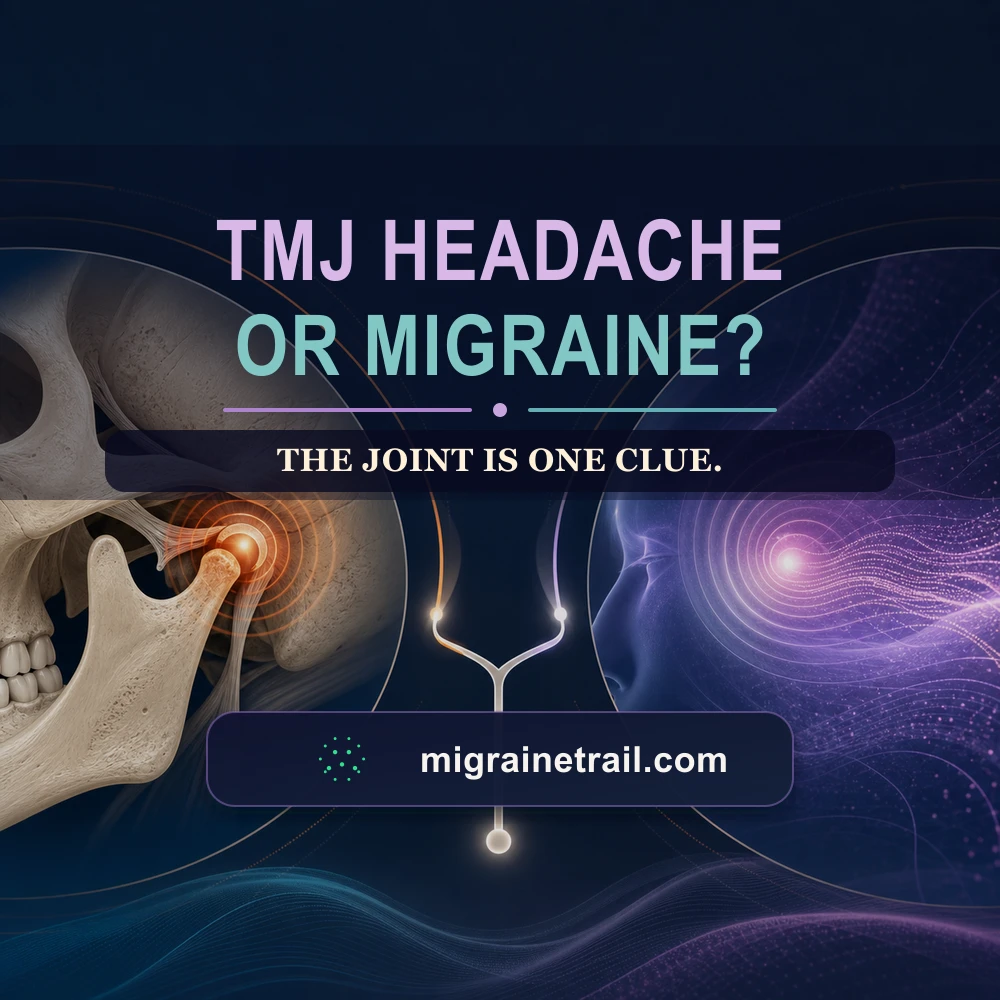
TMJ Headache or Migraine? 7 Differences You Can Track
Jaw disorders and migraine are strongly linked, and each makes the other worse. Telling them apart matters because they need different treatment — and many people have both.
Read Article
Why Does My Migraine Start at the Same Time Every Day?
Migraine attacks follow a genuine 24-hour rhythm, with a well-documented early-morning peak. If yours arrive on a schedule, the clock itself is data worth collecting.
Read ArticleThe Migraine Hangover Is Real: Why You Still Feel Awful After the Pain Ends
Most people report at least one non-headache symptom after the pain stops. The postdrome is a documented phase of the attack — and leaving it out makes your attacks look shorter than they are.
Read Article
Migraine Nausea: What to Discuss With Your Doctor When You Cannot Keep Medicine Down
Nausea does not just make a migraine unpleasant — it slows the stomach, which can delay how oral medication is absorbed. That is a solvable problem worth raising with your doctor.
Read ArticleWhy Does My Hair Hurt During a Migraine? Allodynia Explained
When brushing your hair or resting your head on a pillow hurts, that is allodynia — pain from something that should not be painful. It is a recognised migraine feature with a clear treatment implication.
Read Article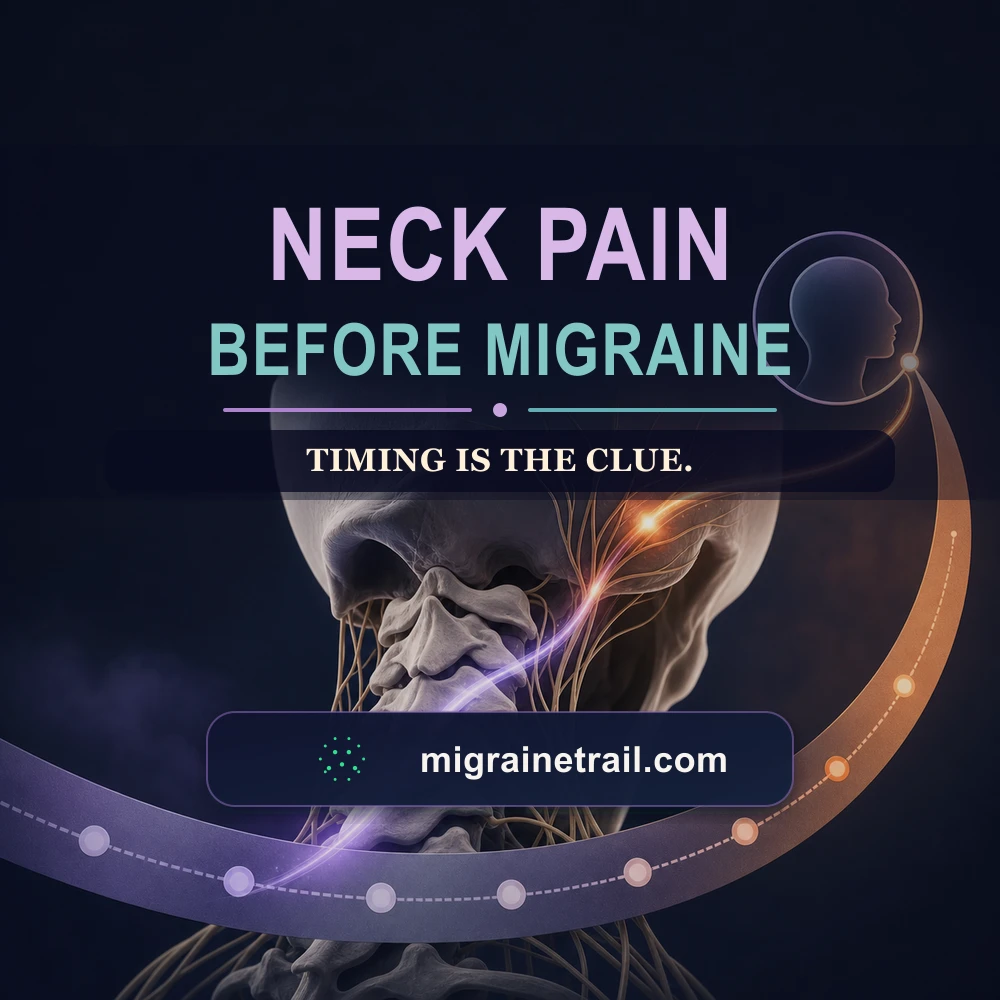
Why Does My Neck Hurt Before a Migraine? The Timing Clue Most People Miss
Neck pain is more common in migraine than nausea is, and it often arrives before the head pain rather than because of it. Which comes first is the detail worth tracking.
Read Article
Why Do I Wake Up With a Migraine? 9 Clues to Track Before Breakfast
Migraine attacks peak in the early morning hours, and the reasons often trace back to the night before. Here are nine things worth tracking between waking and breakfast.
Read Article
Botox for Chronic Migraine: How It Works, Who Qualifies, and What to Expect
OnabotulinumtoxinA (Botox) is FDA-approved for chronic migraine — 15+ headache days per month. Injections every 12 weeks at 31 sites around the head and neck reduce migraine days by an average of 8–9 per month. Here's what the procedure involves and when it works.
Read Article
Magnesium for Migraine: Which Form, What Dose, and What the Evidence Says
Magnesium deficiency is found in up to 50% of migraine patients. Oral supplementation at 400–600mg/day reduces attack frequency in clinical trials. Learn which form absorbs best, how long it takes to work, and when IV magnesium is used.
Read Article
Topamax (Topiramate) for Migraine Prevention: Dosage, Side Effects, and What to Expect
Topiramate (Topamax) is one of the few FDA-approved preventive medications for migraine. Learn the titration schedule, how long it takes to work, the cognitive side effects, and who it works best for.
Read Article
Migraine During Pregnancy by Trimester: What to Expect Week by Week
Migraines often worsen in the first trimester, improve dramatically in the second as estrogen stabilizes, then can return in the third. Learn what's safe to take at each stage and when to call your doctor.
Read Article
Migraine vs Cluster Headache: Key Differences in Symptoms, Timing, and Treatment
Cluster headaches are short, excruciating, always one-sided attacks around the eye, with autonomic symptoms like tearing and eyelid drooping. Migraine lasts 4–72 hours with nausea and light sensitivity. Learn the key differences and why treatment is completely different.
Read Article
Qulipta (Atogepant) for Migraine Prevention: Dosage, Results, and Side Effects
Qulipta (atogepant) is an oral daily CGRP antagonist approved for preventing both episodic and chronic migraine. Learn the three dose options, how long it takes to work, and how it compares to other preventives.
Read Article
Postpartum Migraine Timeline: When Attacks Start, Peak, and Improve
Migraines often surge in the first week postpartum as estrogen crashes, then fluctuate for months as hormones restabilize. Here is a week-by-week and month-by-month timeline — and which medications are safe while breastfeeding.
Read ArticleReady to start tracking?
Download Migraine Trail free on the App Store.