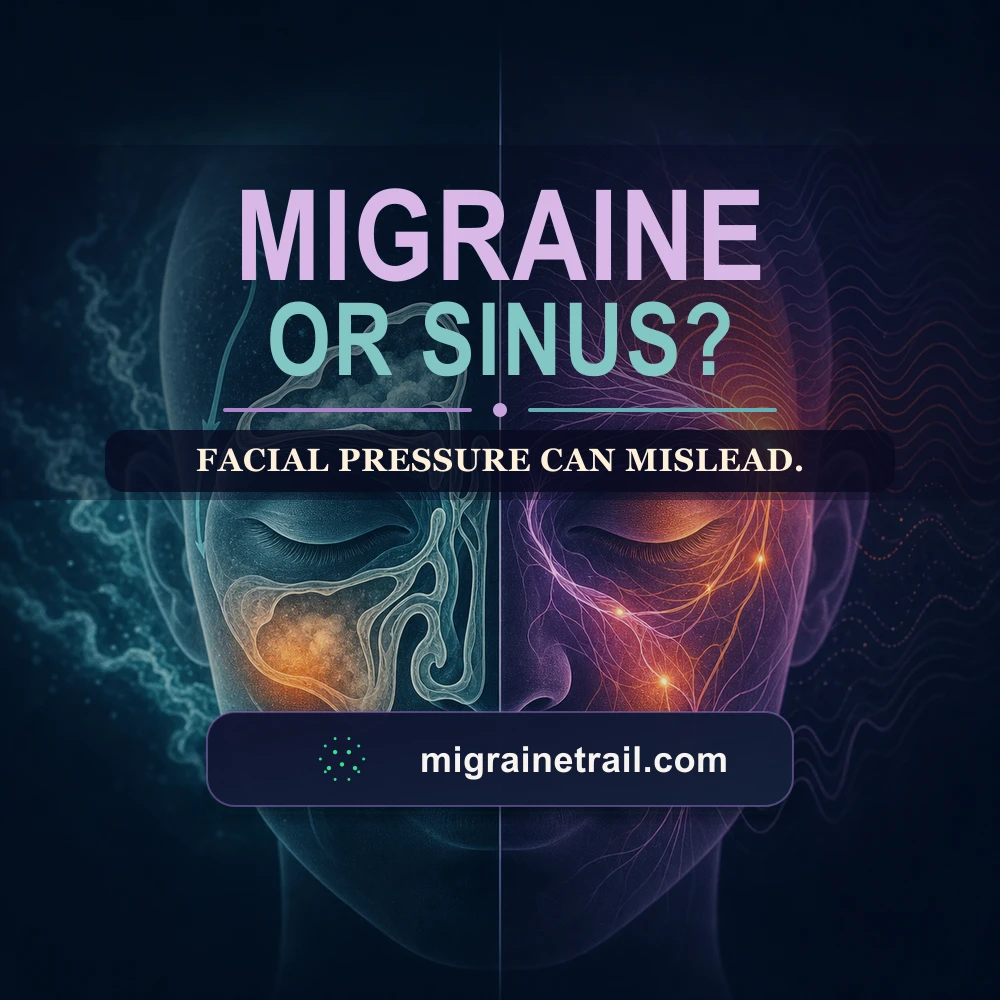
Research shows that up to 90% of people who self-diagnose with "sinus headache" actually have migraine. True sinus headache (from sinusitis) requires a documented bacterial or viral sinus infection, with fever, nasal discharge, and facial pain that is worse when bending forward. Migraine can cause nasal congestion and facial pressure — which is why the confusion is so common — but it responds to migraine-specific treatments, not decongestants or antibiotics. Misidentifying one as the other delays effective care.
If you have been treating recurring "sinus headaches" with decongestants and not getting lasting relief, this distinction is worth understanding. Use the free Sinus Headache vs Migraine Pattern Checker to compare the headache features, nasal findings, and respiratory-illness course side by side.
Medical Quick Facts
| Feature | Migraine | True Sinus Headache |
|---|---|---|
| Cause | Neurological — trigeminal activation | Bacterial or viral sinusitis |
| Pain location | Temple, behind one eye, forehead | Cheek, bridge of nose, above eyebrows |
| Pain quality | Throbbing, pulsating | Dull, constant pressure |
| Nasal symptoms | Congestion (autonomic response) | Thick yellow/green discharge, reduced smell |
| Fever | No | Often present |
| Responds to | Triptans, NSAIDs, gepants | Antibiotics (bacterial), decongestants |
| Responds to decongestants | Rarely, transiently | Yes |
| Light/sound sensitivity | Yes | No |
| Nausea | Yes | Rare |
Why Migraine Causes "Sinus" Symptoms
The trigeminal nerve — the primary nerve involved in migraine — has branches that supply sensation to the sinuses, nose, and face. When the trigeminal nerve is activated during a migraine, it triggers autonomic responses in those regions: nasal congestion, runny nose, watery eyes, and a sense of facial pressure. These are autonomic symptoms driven by the migraine, not by actual sinus inflammation.
This is why migraine sufferers often feel like their sinuses are involved. The congestion is real — it is just neurologically driven, not infectious.
What a True Sinus Headache Requires
A genuine sinus headache from sinusitis needs all of the following to be present:
- Acute sinusitis — confirmed by symptoms lasting >10 days, or worsening after initial improvement, not just a "stuffy feeling"
- Purulent (colored) nasal discharge — not clear congestion
- Facial pain/pressure — specifically in the areas over the sinuses, worsened by bending forward
- Often fever — not always, but common in bacterial sinusitis
- Reduced sense of smell — frequently reported
If the headache is mainly throbbing, or if you have nausea, light sensitivity, or sound sensitivity, the diagnosis is migraine even if nasal congestion is also present.
The "Sinus" Trigger That's Actually a Migraine Trigger
Weather changes, seasonal allergens, and barometric pressure shifts — things people associate with sinus problems — are also major migraine triggers. A person whose headaches worsen during allergy season or pressure changes often concludes it must be sinus-related. In most cases, it is the pressure change or allergen driving a migraine, not sinusitis.
Allergy-Related Headaches
Allergic rhinitis (hay fever) can contribute to headaches through nasal congestion, increased intracranial pressure from congestion, and disrupted sleep. But even allergy-related headaches are more often migraine attacks triggered by the inflammatory state than true sinus headaches. Treating the allergies may reduce migraine frequency, but the headaches themselves need migraine-specific treatment.
Frequently Asked Questions
I had a CT scan and my sinuses look "cloudy" — does that mean I have sinus headache?
Not necessarily. Incidental mucosal thickening appears on imaging in many people without symptoms. A radiological finding alone does not diagnose sinusitis or explain headache, especially without the clinical signs above.
Why isn't my decongestant working?
Decongestants (pseudoephedrine, oxymetazoline) reduce nasal congestion by constricting blood vessels. They do not address the trigeminal activation that drives migraine. Some people notice very temporary relief from congestion but the headache continues. If decongestants aren't working, try a migraine-specific treatment.
Should I see an ENT or a neurologist?
If you have frequent recurring headaches with light/sound sensitivity or nausea, a neurologist is the right specialist. An ENT is appropriate if you have recurrent sinusitis with documented infections, structural issues (deviated septum), or symptoms that clearly resolve with antibiotics.
Track your headache features carefully in Migraine Trail — symptom-by-symptom logs are far more useful for a correct diagnosis than memory-based descriptions at a doctor's visit.