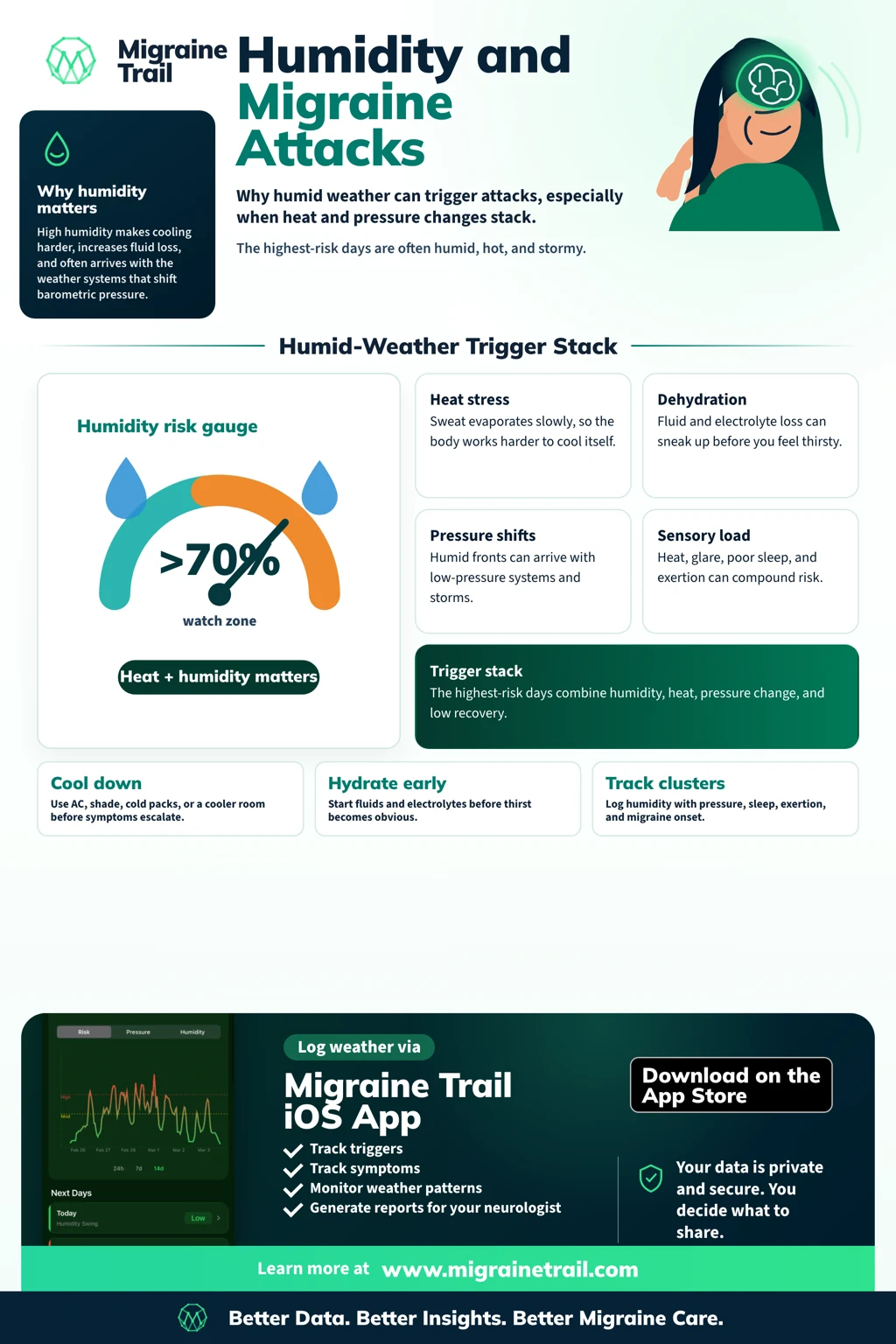
High humidity triggers migraines through a combination of mechanisms: it impairs the body's ability to cool itself (raising core temperature), accelerates dehydration through sweat that doesn't evaporate, and often accompanies the low-pressure weather systems that independently trigger attacks. Relative humidity above 70% combined with heat is the highest-risk combination. Air conditioning, aggressive hydration, and early medication use are the most effective countermeasures.
Weather is one of the most commonly reported migraine triggers, and humidity is one of the most frequently cited weather factors. Understanding why it happens makes it easier to anticipate and manage.
Medical Quick Facts
| Fact | Answer |
|---|---|
| High-risk humidity level | Above 70% relative humidity |
| Highest-risk combination | High humidity + heat + low barometric pressure |
| Mechanism | Heat stress, dehydration, atmospheric pressure change |
| Most affected seasons | Summer, monsoon season, tropical climates |
| Protective strategies | AC, aggressive hydration, early medication |
| Tracking tool | Pair cycle/weather data in a migraine log |
Why Humidity Affects the Migraine Brain
Heat and cooling failure. At high humidity, sweat cannot evaporate efficiently because the air is already saturated with water. This means the body's primary cooling mechanism fails. Core body temperature rises, and the brain — which is exquisitely sensitive to temperature — becomes more excitable. A more excitable brain is a more migraine-prone brain.
Dehydration. Even when you don't feel sweaty, your body loses more fluid in humid heat. Dehydration is itself a migraine trigger, and the two compound each other quickly on a humid day.
Barometric pressure. Humid air is associated with approaching storm systems, which carry dropping barometric pressure — one of the best-studied weather triggers for migraine. The humidity and the pressure change often arrive together, creating a compound trigger effect consistent with trigger stacking.
Air quality. High-humidity days also correlate with elevated pollen counts and smog. Both are independent migraine triggers for susceptible people.
Identifying Your Humidity Threshold
Not everyone responds to the same humidity level. Some people notice attacks reliably above 65%; others only at 80%+. The only way to find your personal threshold is to track it.
Log your attacks alongside the day's weather conditions for 2–3 months. Most weather apps report relative humidity hourly. Over time you will see whether your attacks cluster on high-humidity days, on the days before a storm, or only when humidity and heat combine above certain thresholds.
Managing Humid-Weather Migraines
Stay in air conditioning. AC reduces both temperature and humidity indoors. On high-risk days, limiting time outdoors during peak heat (10am–4pm) is a practical first step.
Hydrate ahead. On days when high humidity is forecast, increase water intake starting the morning before — not after you already have a headache. Electrolyte drinks are useful for days with significant sweat loss.
Pre-empt with your rescue medication. If your log shows that high-humidity days reliably produce attacks, discuss short-term mini-prophylaxis with your doctor (an NSAID taken on high-risk forecast days).
Use a forecast. The Migraine Trail weather-prediction feature flags high-risk days so you can prepare rather than react.
Frequently Asked Questions
Does dry air also trigger migraines?
Yes — very dry air (below 30% humidity) can irritate nasal passages and sinuses, which some people experience as a headache trigger. Cold, dry winter air is a separate but real trigger pattern for some migrainers.
Is it the humidity itself, or the weather change?
Both. Persistent high humidity without a pressure change can still trigger attacks via heat stress and dehydration. But the combination of humidity plus a dropping pressure system — the classic summer thunderstorm setup — is the highest-risk scenario.
Will moving to a drier climate help?
For some people, yes. Those whose attacks are strongly weather-driven and who live in high-humidity climates report meaningful improvement in drier, more stable climates. But the effect is individual, and other triggers don't go away with a move.
What humidity level is best for migraine sufferers?
Research and patient reports suggest that indoor relative humidity between 40–55% is generally most comfortable for migraine-prone people — not too dry, not too humid.