If you live with chronic migraine, you have likely been told two contradictory things in the same week. A neurologist tells you it is a "real neurological disorder with a genetic basis." A manager tells you it is "just headaches" and asks if you can push through one more deadline. Both responses leave you carrying the weight, often quietly, often alone.
The legal and medical reality is clearer than the cultural conversation suggests. Chronic migraine has a documented genetic component and is recognized as a disability under most major disability frameworks when it produces substantial functional impairment. Understanding both halves of that sentence is the difference between fighting for accommodations alone and walking in with the law on your side.
The Genetic Half: Why Chronic Migraine Is Not a Lifestyle Choice
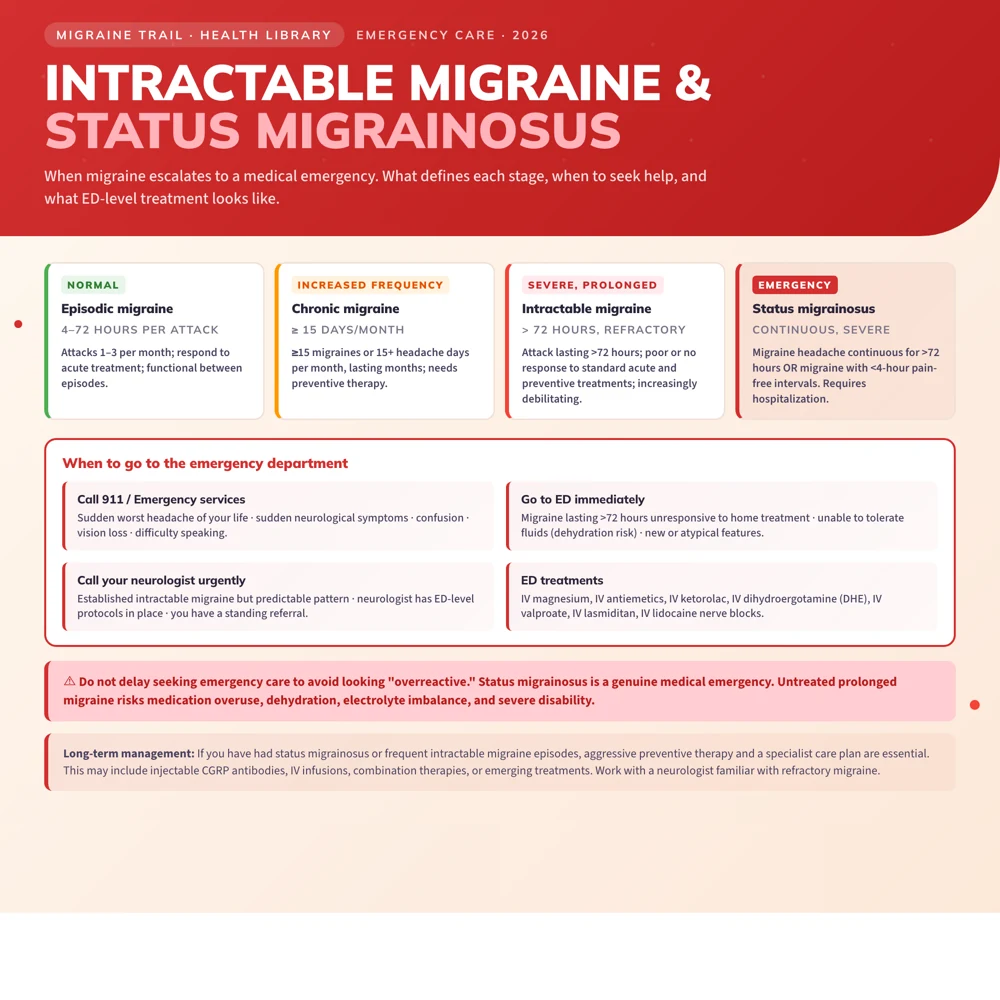
Chronic migraine is defined by the International Classification of Headache Disorders (ICHD-3) as headache occurring on 15 or more days per month for more than three months, with at least 8 days meeting migraine criteria. It is not "a lot of regular headaches." It is a distinct neurological phenotype with measurable changes in brain structure and function.
You can organize three months of diary counts with the free Episodic vs Chronic Migraine Frequency Checker. It compares total headache days and migraine-feature days with the key frequency thresholds without claiming to diagnose the headache type.
The hereditary basis is well established:
- The World Health Organization classifies migraine among the leading causes of disability worldwide, with strong familial clustering.
- Over 120 genetic loci influence migraine risk, with chronic migraine showing higher polygenic risk scores than episodic migraine.
- Rare monogenic subtypes like familial hemiplegic migraine prove that single gene mutations alone can produce severe migraine.
- Twin studies estimate heritability between 40 and 60% for migraine overall.
This matters legally because most disability law distinguishes between conditions a person can control through behavior change and conditions with a physiological or genetic origin. Chronic migraine sits firmly in the second category.
The Legal Half: How "Disability" Is Actually Defined
The word "disability" carries different definitions in different systems. The medical definition is about impairment. The legal definition is about how much that impairment limits your daily life. You do not need to be bedridden to qualify, you need to show that the condition substantially limits a major life activity.
United States: The Americans with Disabilities Act (ADA)
Under the Americans with Disabilities Act (ADA), a person is considered to have a disability if they have a physical or mental impairment that substantially limits one or more major life activities. The ADA Amendments Act of 2008 explicitly broadened this definition to include conditions that are episodic or in remission, which directly captures the on-and-off nature of chronic migraine.
The Job Accommodation Network (JAN), a federally funded resource, lists chronic migraine as a covered condition and provides employer-facing accommodation guidance. Typical reasonable accommodations include:
- Flexible scheduling and the ability to start late or leave early during an attack
- A darkened or private workspace, or permission to work from home
- Reduced fluorescent lighting or FL-41 tinted lenses
- Permission to keep medication, water, and ice packs at the desk
- Breaks to manage attacks without using vacation time
Social Security Disability (SSDI and SSI)
The US Social Security Administration evaluates chronic migraine under Listing 11.02 (epilepsy) by analogy, because there is no dedicated migraine listing. Approval typically requires documented evidence of:
- Headaches on most days despite treatment
- A neurologist's diagnosis and treatment record over an extended period
- Functional limitations that prevent sustained work
- Failed or intolerable response to multiple preventive medications
Detailed attack logs are central to a successful claim, which is one of the reasons clinicians now strongly recommend digital tracking. Your tracker is your evidence.
United Kingdom: The Equality Act 2010
Under the Equality Act 2010, a condition counts as a disability if it has a "substantial and long-term adverse effect on your ability to carry out normal day-to-day activities." Chronic migraine meets this when attacks are recurrent, last more than 12 months, and limit activities like working, reading, or maintaining social relationships.
The UK's Access to Work scheme can fund workplace adjustments specifically for chronic migraine sufferers, including ergonomic lighting, noise-reducing equipment, and taxi costs during attacks.
European Union and Other Jurisdictions
The EU framework follows similar principles, often referencing the UN Convention on the Rights of Persons with Disabilities. Canada (under the Accessible Canada Act), Australia (Disability Discrimination Act), and most OECD countries treat chronic migraine as a qualifying condition when functional impairment is documented.
What "Substantial Limitation" Looks Like in Practice
Whether you qualify is rarely about the diagnosis itself. It is about functional evidence. Adjudicators, HR teams, and disability assessors look for patterns like:
- Number of headache days per month, ideally tracked over 6 to 12 months
- Days of headache-related disability over three months (the free MIDAS score calculator measures impact across work, household, and social activities)
- Treatments tried and their outcomes
- Days of missed work, school, or caregiving
- ER visits and acute care interactions
If you have been keeping a detailed log, you walk in with three years of evidence. If you have not, you are reconstructing from memory, which adjudicators discount.
What This Means If You Are Applying for Protection
If you are considering disclosing or applying for accommodations:
- Get a clear diagnosis on paper. "Chronic migraine, per ICHD-3" written by a neurologist, ideally with mention of any genetic factors such as a family history or hemiplegic features.
- Document treatment history. Acute and preventive medications, CGRP inhibitor responses, Botox, neuromodulation devices.
- Track every attack. Date, duration, severity, functional impact, treatment used, outcome.
- Quantify lost function. Hours of work missed, tasks delegated, activities skipped. This is the language disability frameworks speak.
- Request, do not ask. In ADA contexts, you request a reasonable accommodation, you do not negotiate for it. Frame it accordingly.
The Workplace Conversation Most People Dread
Disclosure is personal and there is no universally right answer. Some people thrive after disclosing and gaining formal protections. Others find that informal flexibility works better in their specific workplace. A few principles tend to hold:
- You are not legally required to disclose your diagnosis to keep your job, only to access ADA-style accommodations.
- Once you disclose, the protections kick in immediately. Retaliation after disclosure is itself a legal violation.
- HR is not your friend, but they are also not your enemy. They are managing the company's exposure, which sometimes aligns with your interests.
Reading the emotional burden of chronic migraine and our piece on the invisible burden on mental health may help you prepare for the emotional weight of these conversations, separate from the legal mechanics.
A Note on Stigma
Chronic migraine remains one of the most underestimated disabilities precisely because it is invisible. The same gene variants that make your brain hyperexcitable also make you look "fine" between attacks. That gap, between how you feel and how you appear, is the heart of the social struggle. The law does not require you to look sick to be protected.
The clearest path forward is documentation. Track every attack with the free Migraine Trail app, generate structured PDF reports for your neurologist or attorney, and let the data make a case your words sometimes cannot. Your migraines are not your fault, and the evidence trail you build is the most powerful thing you can carry into any conversation about your future.