Migraine TrailMigraine Trail
Features
BlogHealth LibraryMigraine Guide
Free ToolsCompareHelpPricingGet the App
FeaturesBlogHealth LibraryFree ToolsCompareMigraine GuideHelpPricingGet the AppContact
Home/Health Library/Management/CGRP Inhibitors - What You Need to Know
Part of: The Ultimate Guide to Migraine Management
Management7 min read
2026-02-15

CGRP Inhibitors - What You Need to Know

By Susana J
Share
CGRP Inhibitors - What You Need to Know
Share
SJ
Susana J
Health Writer & Editor

Specializes in neuroscience-informed health content, translating peer-reviewed migraine research into clear, patient-friendly articles.

Learn about our editorial process
Free PDF Guide

Get the free migraine tracking guide

A practical 12-page guide: which triggers to watch, how to log symptoms doctors actually use, and how to spot your patterns. Emailed free — no credit card.

Get the free guide

Medical Disclaimer

The content provided in this article is for general informational purposes only and does not constitute medical advice. Always check with a doctor or neurologist regarding any medical questions or treatment decisions. Never disregard professional medical advice or delay in seeking it because of something you have read on this website.

Related Articles

Acute vs. Preventive Migraine Treatment Approaches

Should you manage headaches when they happen or work to prevent them? Learn about both approaches and when each is right for you.

8 min read

How a Migraine Journal Reduces Chronic Pain

The psychology of 'Externalization.' Why writing down your pain actually lowers the brain's perception of threat and calms the amygdala.

6 min read

How to Spot Patterns and Stop Migraines

Data is useless without analysis. Learn how to identify the three major migraine patterns: The Weekend Washer, The Hormonal Cycle, and The Cumulative Stack.

6 min read

Latest from the Blog

2026-10-08

Altitude Migraine or Mountain Sickness?

Headache after ascent may be migraine, high-altitude headache, or acute mountain sickness. Know the timing, symptoms, ascent limits, and warning signs.

2026-10-06

Migraine Tracker for Sharing With Doctors: What to Export and How

Learn what a doctor-ready migraine report should include, from headache days and medication response to symptoms, patterns, and the questions you want answered.

Ready to start tracking?

Download Migraine Trail free on the App Store.

Download Migraine Trail free on the App Store
Migraine TrailMigraine Trail

The AI-powered migraine tracker built by patients, for patients.

Download App

Product

  • Pricing
  • Compare
  • Best Apps 2026
  • Partners
  • Advertise with Us
  • Affiliates
  • Help
  • Send Feedback

Features

  • Everything included
  • Voice Logging
  • Weather Risk Prediction
  • Migraine Weather Forecast
  • Doctor-Ready Reports
  • Apple Watch App

About

  • About Migraine Trail
  • Migraine Tracker App
  • Free Migraine Tracker
  • Headache Diary
  • Migraine Journal
  • Symptom Tracker
  • Trigger Tracking
  • Track Without Typing
  • Easy Tracker
  • AI Tracking

Learn

  • Blog
  • Health Library
  • Migraine Guide
  • Free Tools
  • Editorial Policy

Legal

  • Privacy Policy
  • Terms of Service
  • Health Data Privacy
  • Cookies

Connect

  • Contact

© 2026 Migraine Trail

Migraine Trail is not a healthcare provider or medical device. Content and tools are educational only and do not provide diagnosis, treatment, or medical advice. Never delay care or change treatment based on this site. See our full Medical Disclaimer and Privacy Policy.

The CGRP Revolution

Calcitonin gene-related peptide (CGRP) inhibitors represent the first class of medications designed specifically for migraine prevention. As a preventive treatment approach, they have transformed care for many patients since their introduction in 2018.

What Is CGRP?

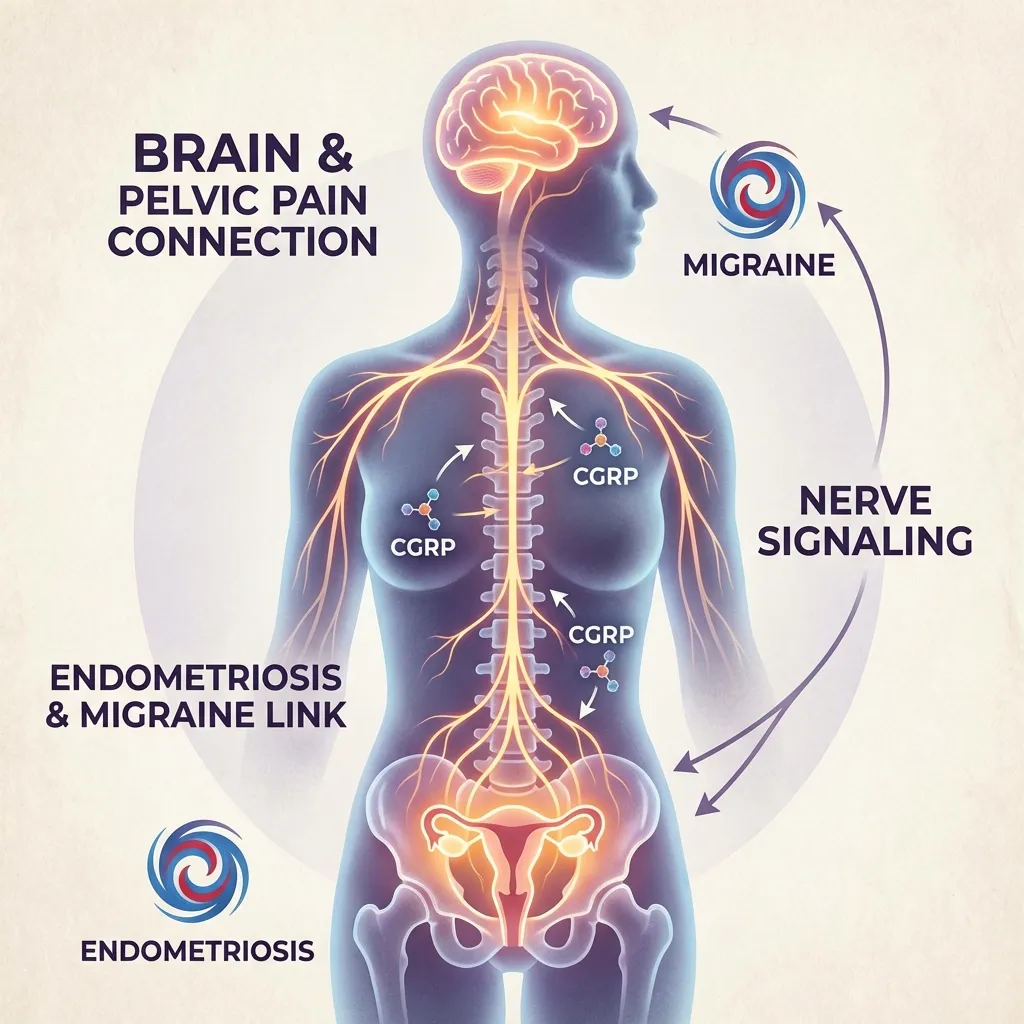
CGRP is a protein found throughout the nervous system that plays a central role in migraine:

  • Released during migraine attacks by trigeminal nerve fibers
  • Causes blood vessel dilation in the brain
  • Promotes neuroinflammation
  • Transmits pain signals in the trigeminal system
  • Levels are elevated in people with chronic migraine even between attacks
  • Researchers are also studying PACAP, a related neuropeptide, as a future treatment target

Types of CGRP Inhibitors

Monoclonal Antibodies (Prevention)

These are injected medications that block CGRP or its receptor for weeks at a time:

  • Erenumab (Aimovig) - blocks the CGRP receptor; monthly self-injection
  • Fremanezumab (Ajovy) - blocks CGRP itself; monthly or quarterly injection
  • Galcanezumab (Emgality) - blocks CGRP; monthly self-injection
  • Eptinezumab (Vyepti) - blocks CGRP; quarterly IV infusion

Gepants (Acute and Preventive)

These are oral medications that block the CGRP receptor:

  • Ubrogepant (Ubrelvy) - acute treatment only
  • Rimegepant (Nurtec ODT) - approved for both acute treatment and prevention
  • Atogepant (Qulipta) - daily oral preventive

Who Are They For?

CGRP inhibitors are typically recommended for:

  • Patients with 4 or more migraine days per month
  • Those who have tried and failed 2 or more traditional preventive medications
  • Patients who cannot tolerate side effects of other preventives
  • Those with medication overuse headache (can use while reducing other medications)

What to Expect

Effectiveness

  • About 50% of patients see their migraine days cut in half
  • Some patients respond within the first month
  • Full effect may take up to 3 months
  • A small percentage of patients become completely migraine-free

Side Effects

Generally very well tolerated:

  • Injection site reactions (redness, pain) - most common, mild
  • Constipation - particularly with erenumab
  • Allergic reactions - rare but possible
  • No significant drug interactions with most medications

What They Do Not Do

  • They do not cure migraines
  • They do not work for everyone - about 30-40% of patients do not respond
  • They should be used alongside lifestyle management for best results
  • Stopping treatment usually leads to return of previous migraine frequency

Cost and Access

CGRP inhibitors are expensive medications. Insurance coverage varies:

  • Many insurers require step therapy (trying cheaper options first)
  • Manufacturer patient assistance programs are available
  • Some patients may qualify for specialty pharmacy discounts
  • Discuss options with your neurologist and insurance provider

Tracking Treatment Response

When starting a CGRP inhibitor, tracking your migraine frequency, severity, and acute medication use is essential. Using one of the best apps to track migraine symptoms can streamline this process. This data helps you and your doctor evaluate whether the treatment is working and make informed decisions about continuing, switching, or adjusting your treatment plan.

Start tracking your treatment response today with the Migraine Trail, a free tracking tool designed to help you monitor medications, track migraine triggers, and share clear reports with your neurologist.