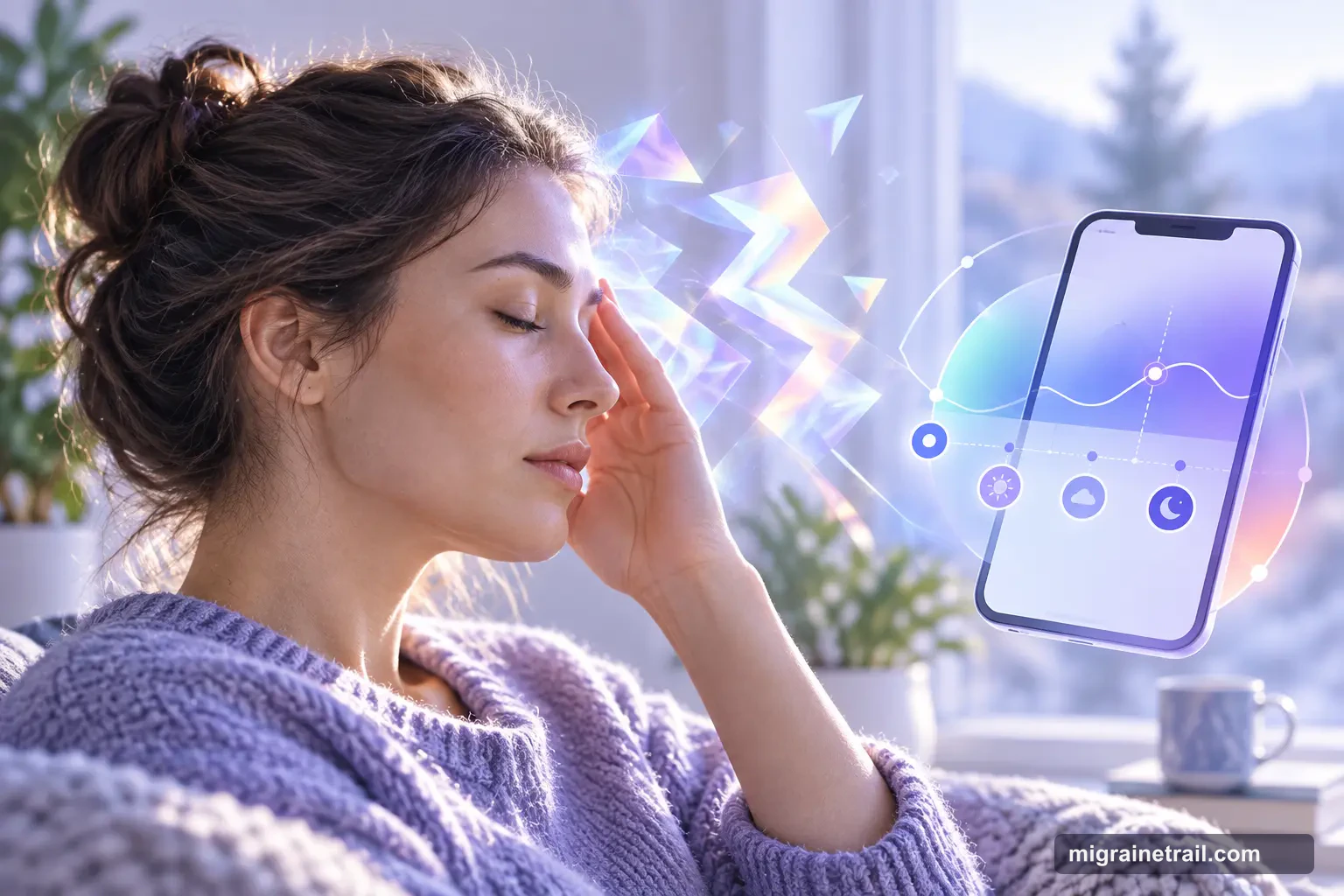
For about 25-30% of people with migraine, the headache is preceded by a terrifying light show.
One moment you are reading a book; the next, a shimmering blind spot appears in the center of your vision. It grows, expanding into a jagged, C-shaped castle of spectral colors. You lose your peripheral vision. Your face goes numb. You can't find the words to speak.
This is the Aura. To the uninitiated, it feels like a stroke. To the migraineur, it is the warning siren of an incoming attack. But what exactly is happening inside your skull?
The Biology: Cortical Spreading Depression (CSD)
In 1944, a Brazilian neurophysiologist named Aristides Leao discovered the mechanism behind aura. He called it Cortical Spreading Depression.
Imagine your brain's visual cortex (at the back of your head) is a calm lake.
Now, imagine someone throws a large boulder into that lake.
A massive ripple moves outward from the center.
- The Wave Front (Excitation): The crest of the wave represents intense neuronal firing. Millions of neurons fire simultaneously. This creates the "positive symptoms", the flashing lights, sparks, and geometric patterns you see. Our migraine symptom tracker helps you log and spot patterns across all your symptoms.
- The Trough (Depression): Behind the wave comes a period of total silence. The neurons are exhausted and cannot fire. This creates the "negative symptoms", the blind spots (scotoma) or numbness.
This wave moves across the physical surface of your brain at a rate of 3mm per minute. This is why the visual disturbance slowly "marches" across your field of vision over the course of 20-60 minutes.
Types of Aura Symptoms
Aura is not just visual. It can affect any sense, depending on which part of the brain the CSD wave hits. This makes aura one of the most distinctive features among different types of headaches.
1. Visual Aura (Retinal/Occipital)
- Fortification Spectra: Zigzag lines that look like the walls of a medieval fort.
- Scintillating Scotoma: A flickering, shimmering blind spot.
- Tunnel Vision: Loss of peripheral sight.
2. Sensory Aura (Parietal Lobe)
- The "March": Tingling starts in the thumb, moves up the hand to the arm, and then jumps to the face/tongue. This follows the "Homunculus" map of the sensory cortex.
3. Dysphasic Aura (Temporal Lobe/Broca's Area)
- Aphasia: You know what you want to say, but you can't say it. Or you speak gibberish. This is the most frightening symptom as it mimics a stroke perfectly.
4. Alice in Wonderland Syndrome (Parietal-Temporal Junction)
- Metamorphopsia: Objects appear incredibly large (Macropsia) or incredibly small (Micropsia). You may feel like your own body is shrinking or growing.
The Myth of "Retinal Migraine"
Many people misuse the term "Retinal Migraine."
- True Retinal Migraine: Blindness/flashing in ONE EYE only. If you cover one eye, the show stops. This is a retinal vascular issue.
- Cortical Aura: Flashing in BOTH EYES. If you cover one eye, you still see it. This is a brain issue.
99% of people have Cortical Aura, not Retinal Migraine. See our ocular migraine guide for a full breakdown of these visual symptoms.
Treatment and Management
Visual aura is notoriously difficult to stop once the wave begins. It is a biological avalanche; once the snow starts moving, it is hard to halt. However, emerging strategies help.
Acute Treatments
- Magnesium Load: Some patients report that a rapid dose of Magnesium (specifically Magnesium Threonate, which crosses the blood-brain barrier) can slow the CSD wave.
- To Triptan or Not to Triptan?
- Old Advice: "Don't take Triptans during Aura because of stroke risk." (This has largely been debunked).
- New Advice: Triptans work on pain, not aura. Taking them during aura ensures they are in your bloodstream before the headache starts. However, discuss with your doctor if you have complex/hemiplegic aura.
Prevention: Energy Conservation
Why does CSD happen? It is an energy crisis. The brain runs out of fuel (ATP) and misfires.
- Riboflavin (B2): 400mg daily supports mitochondrial energy production. This is one of several natural remedies for migraines backed by evidence.
- Ketogenic Diet: Ketones are a more stable fuel source than glucose. Many chronic aura patients find total remission on a Keto diet because it stabilizes brain hypexcitability.
When to Call 911
Always go to the ER if:
- The aura lasts longer than 60 minutes.
- You experience weakness/paralysis on one side (Hemiplegia).
- It is your "first and worst" aura ever (Rule out TIA/Stroke).
Track your aura episodes and identify what triggers them with the Migraine Trail, a free app designed to help you log symptoms, track migraine triggers, and share detailed records with your neurologist.