Migraine TrailMigraine Trail
Features
BlogHealth LibraryMigraine Guide
Free ToolsCompareHelpPricingGet the App
FeaturesBlogHealth LibraryFree ToolsCompareMigraine GuideHelpPricingGet the AppContact
Home/Health Library/Women's Health/CGRP Beyond the Brain: The Endometriosis Connection
Part of: Menstrual Migraine Management - A Practical Guide
Women's Health7 min read
2026-02-03

CGRP Beyond the Brain: The Endometriosis Connection

By Susana J
Share
CGRP Beyond the Brain: The Endometriosis Connection
Share
SJ
Susana J
Health Writer & Editor

Specializes in neuroscience-informed health content, translating peer-reviewed migraine research into clear, patient-friendly articles.

Learn about our editorial process
Free PDF Guide

Get the free migraine tracking guide

A practical 12-page guide: which triggers to watch, how to log symptoms doctors actually use, and how to spot your patterns. Emailed free — no credit card.

Get the free guide

Medical Disclaimer

The content provided in this article is for general informational purposes only and does not constitute medical advice. Always check with a doctor or neurologist regarding any medical questions or treatment decisions. Never disregard professional medical advice or delay in seeking it because of something you have read on this website.

Related Articles

Ovulation Migraine: Why Mid-Cycle Attacks Happen and What to Do

Migraines that strike mid-cycle — around days 12–16 — are triggered by the estrogen surge and drop around ovulation. Learn why they happen, how to track them, and what actually helps.

5 min read

Luteal Phase Migraine: Why Headaches Strike in the Two Weeks Before Your Period

Luteal phase migraines occur in days 15–28 of the cycle, when progesterone rises then falls before menstruation. Learn how to identify this pattern and what strategies work.

5 min read

Migraine and Birth Control: Which Options Are Safe and Which to Avoid

Combined estrogen-progestin pills raise stroke risk in people with migraine with aura and are generally avoided. Progestin-only methods, IUDs, and non-hormonal options are safer. Here's how to choose.

6 min read

Latest from the Blog

2026-10-06

Migraine Tracker for Sharing With Doctors: What to Export and How

Learn what a doctor-ready migraine report should include, from headache days and medication response to symptoms, patterns, and the questions you want answered.

2026-10-01

Migraine Medication Tracking: Dosage, Timing, and Headache Outcomes

Learn what to record when you take migraine medication, including dose, timing, repeat doses, side effects, and headache outcomes, so your diary supports a better treatment conversation.

Ready to start tracking?

Download Migraine Trail free on the App Store.

Download Migraine Trail free on the App Store
Migraine TrailMigraine Trail

The AI-powered migraine tracker built by patients, for patients.

Download App

Product

  • Pricing
  • Compare
  • Best Apps 2026
  • Partners
  • Advertise with Us
  • Affiliates
  • Help
  • Send Feedback

Features

  • Everything included
  • Voice Logging
  • Weather Risk Prediction
  • Migraine Weather Forecast
  • Doctor-Ready Reports
  • Apple Watch App

About

  • About Migraine Trail
  • Migraine Tracker App
  • Free Migraine Tracker
  • Headache Diary
  • Migraine Journal
  • Symptom Tracker
  • Trigger Tracking
  • Track Without Typing
  • Easy Tracker
  • AI Tracking

Learn

  • Blog
  • Health Library
  • Migraine Guide
  • Free Tools
  • Editorial Policy

Legal

  • Privacy Policy
  • Terms of Service
  • Health Data Privacy
  • Cookies

Connect

  • Contact

© 2026 Migraine Trail

Migraine Trail is not a healthcare provider or medical device. Content and tools are educational only and do not provide diagnosis, treatment, or medical advice. Never delay care or change treatment based on this site. See our full Medical Disclaimer and Privacy Policy.

For the last decade, CGRP (Calcitonin Gene-Related Peptide) has been the celebrity molecule of migraine research. It's the target of the newest, most effective drugs (monoclonal antibodies and gepants).

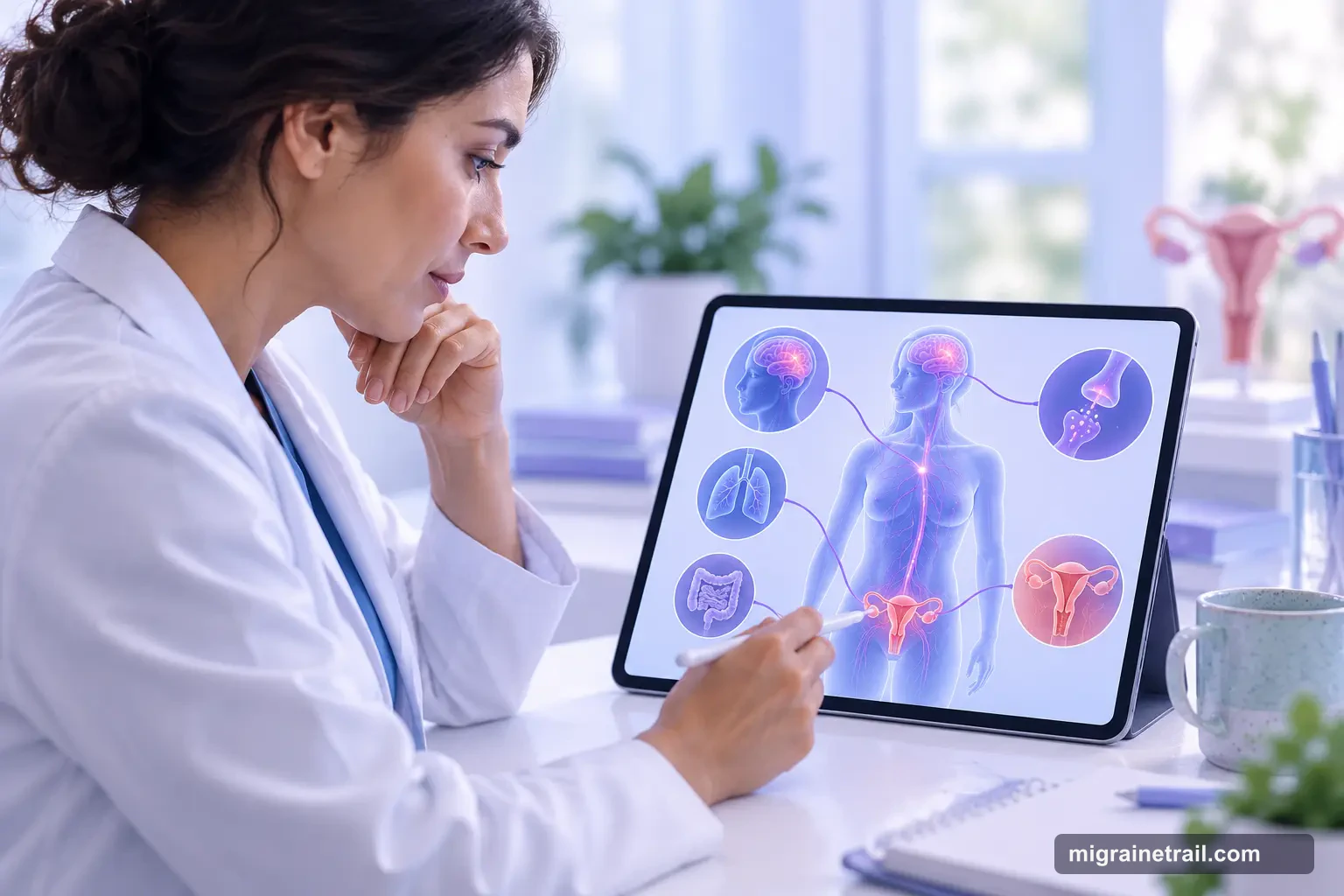
But CGRP doesn't just live in the head. A major study in 2025 has blown the doors open on where else this pain-signaling molecule is causing havoc. The prime suspect? Endometriosis.

The Shared Pathway

Endometriosis sufferers have long noted a correlation with migraine. Women with "endo" are far more likely to experience migraine attacks. We used to think this was just hormonal, similar to how postpartum hormonal shifts trigger migraines through estrogen withdrawal.

Now, we know it's also chemical.

Researchers found that endometriotic lesions are rich in CGRP nerve fibers. Just as CGRP causes blood vessel dilation and pain transmission in the brain's meninges, it appears to drive inflammation and pain processing in the pelvis.

Repurposing Relief

This discovery suggests a massive opportunity: Drug Repurposing.

If CGRP is a driver of endometriosis pain, then the very same CGRP inhibitors used for migraine (like Aimovig, Nurtec, or Ubrelvy) could theoretically treat endometriosis. Early anecdotes and off-label trials are already showing promise, offering hope that we might be able to treat two debilitating conditions with one stone.

It highlights a profound truth: Pain is a systemic issue. The brain and the body are not separate; they speak the same chemical language. Tracking symptoms across both conditions with one of the best apps to track migraines can help reveal these shared patterns.

If you experience both migraines and endometriosis, the this free app can help you spot connections between your symptoms. This free migraine tracker app makes it easy to track migraine triggers alongside hormonal cycles and identify overlapping patterns.