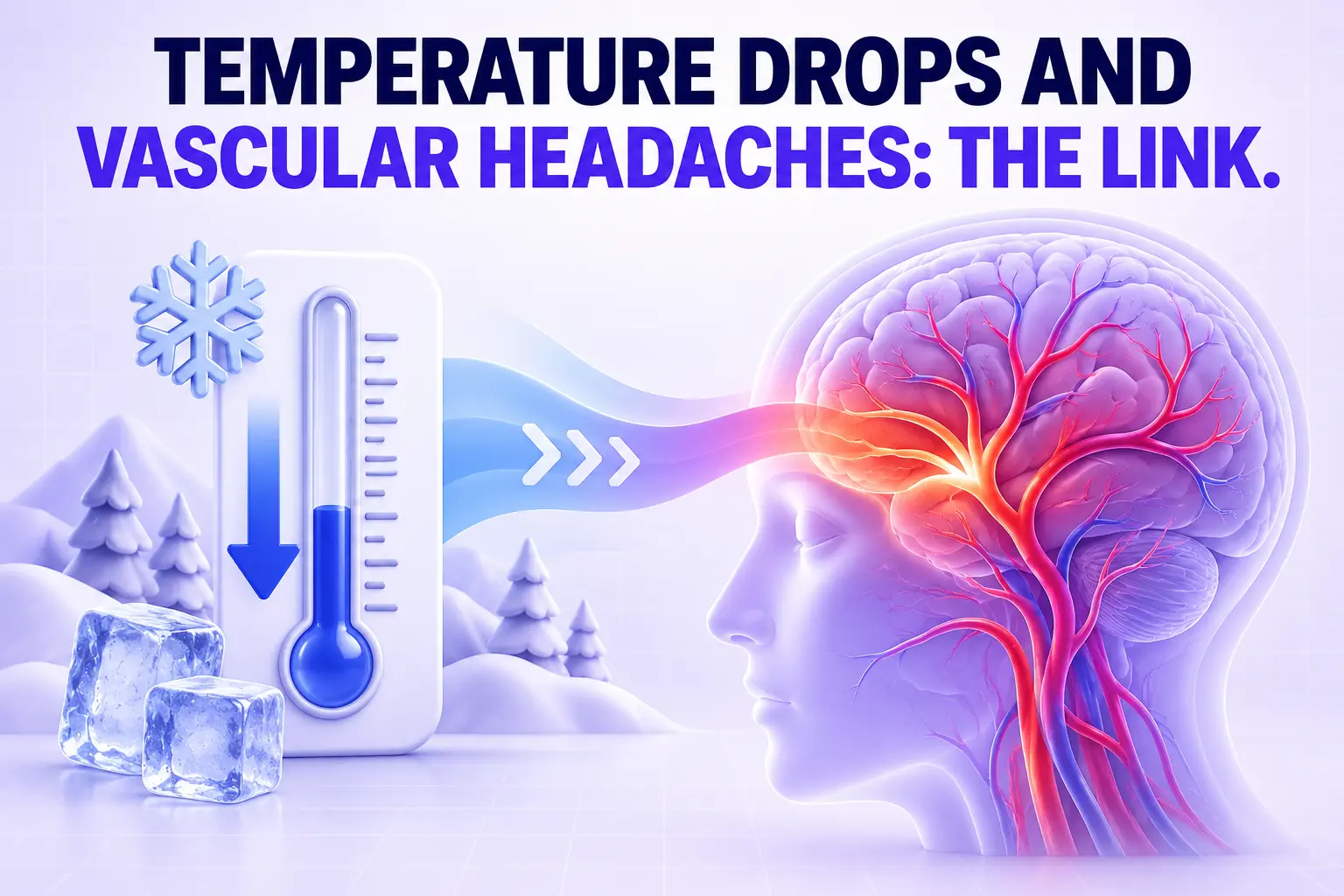
Key Takeaway: Rapid temperature drops trigger vascular headaches through a two-part mechanism: blood vessels first constrict to conserve heat, then dilate as a rebound effect, stretching pain-sensitive nerve fibers in the brain. Cold fronts also bring dry air that irritates sinuses and releases histamine, compounding the migraine risk.
We often talk about barometric pressure when discussing weather-related migraines, but there is another hidden culprit that frequently goes unnoticed: rapid temperature drops.
If you find yourself reaching for your headache diary every time a severe cold front blows through, the science of vascular headaches may explain why.
What Is the Vascular Response to Cold?
Migraines are deeply connected to the vascular system, the network of blood vessels throughout your body and brain. When the outside temperature plummets rapidly, your body goes into a defensive mode to preserve heat.
Vasoconstriction and Vasodilation
- Vasoconstriction: In response to sudden cold, the blood vessels in your skin and extremities narrow (constrict) to keep warm blood closer to your core organs.
- Vasodilation: As a rebound effect, or as the body tries to regulate blood flow to the head, the blood vessels in your brain may subsequently expand (dilate).
This rapid expansion of blood vessels stretches the nerve fibers wrapped around them, sending pain signals to the brain. For someone with a sensitized nervous system, this vascular rollercoaster triggers a full-blown migraine.
How Do Dry Air and Sinus Pressure Contribute to Cold-Weather Migraines?
Cold fronts rarely act alone. A rapid temperature drop is almost always accompanied by a drop in humidity. Cold air holds less moisture, leading to dry winter air.
- Sinus Irritation: Dry air dries out the mucous membranes in your sinuses, causing them to become inflamed.
- Histamine Release: Inflammation prompts the body to release histamine, a known migraine trigger.
- The Squeeze: Inflamed sinuses create pressure precisely where migraine pain is often most severe.
How Can You Protect Yourself from Temperature-Triggered Migraines?
If temperature drops are a primary trigger for you, anticipating the shift is essential.
- Track the Trends: Use an AI-driven migraine tracker that correlates your headaches not just with pressure, but with temperature and humidity. A weather migraine prediction tool can alert you before the drop hits. Identifying the specific pattern (e.g., "headaches occur when the temperature drops more than 15 degrees in 24 hours") allows you to plan.
- Layer Up Early: Don't wait until you are shivering. Keeping your core body temperature stable prevents the extreme vascular response.
- Humidify: Use a humidifier in your bedroom during cold months to keep sinus inflammation at bay.
The weather will always change, but understanding your personal vascular response to cold fronts is essential for effective migraine management. For people living with chronic migraines, using a migraine tracker app to correlate temperature data with your attacks can lead to real migraine relief before the pain sets in.
Frequently Asked Questions
Q: What is a vascular headache?
A vascular headache is a type of headache caused by changes in blood vessel behavior in the brain. When blood vessels rapidly constrict and then dilate, they stretch the surrounding nerve fibers, which sends pain signals to the brain. Migraines are the most common form of vascular headache.
Q: How quickly does a temperature drop need to happen to trigger a migraine?
The speed of the temperature change matters more than the absolute temperature. Many migraine sufferers report attacks when the temperature drops more than 10 to 15 degrees within a 24-hour period. Individual thresholds vary, which is why tracking personal patterns with a migraine app is valuable.
Q: Why does dry winter air make migraines worse?
Cold air holds less moisture, which dries out the mucous membranes in the sinuses. This dryness leads to sinus inflammation, which prompts histamine release, a known migraine trigger. The resulting sinus pressure also concentrates pain in areas where migraines are commonly most severe, around the forehead and eyes.
Q: Can a humidifier help prevent cold-weather migraines?
Using a humidifier in your bedroom during cold months can help maintain moisture levels in your sinuses, reducing the inflammation and histamine release that contribute to migraine onset. While it will not eliminate weather-related migraines entirely, it removes one contributing factor from the overall trigger load.
Keep Reading