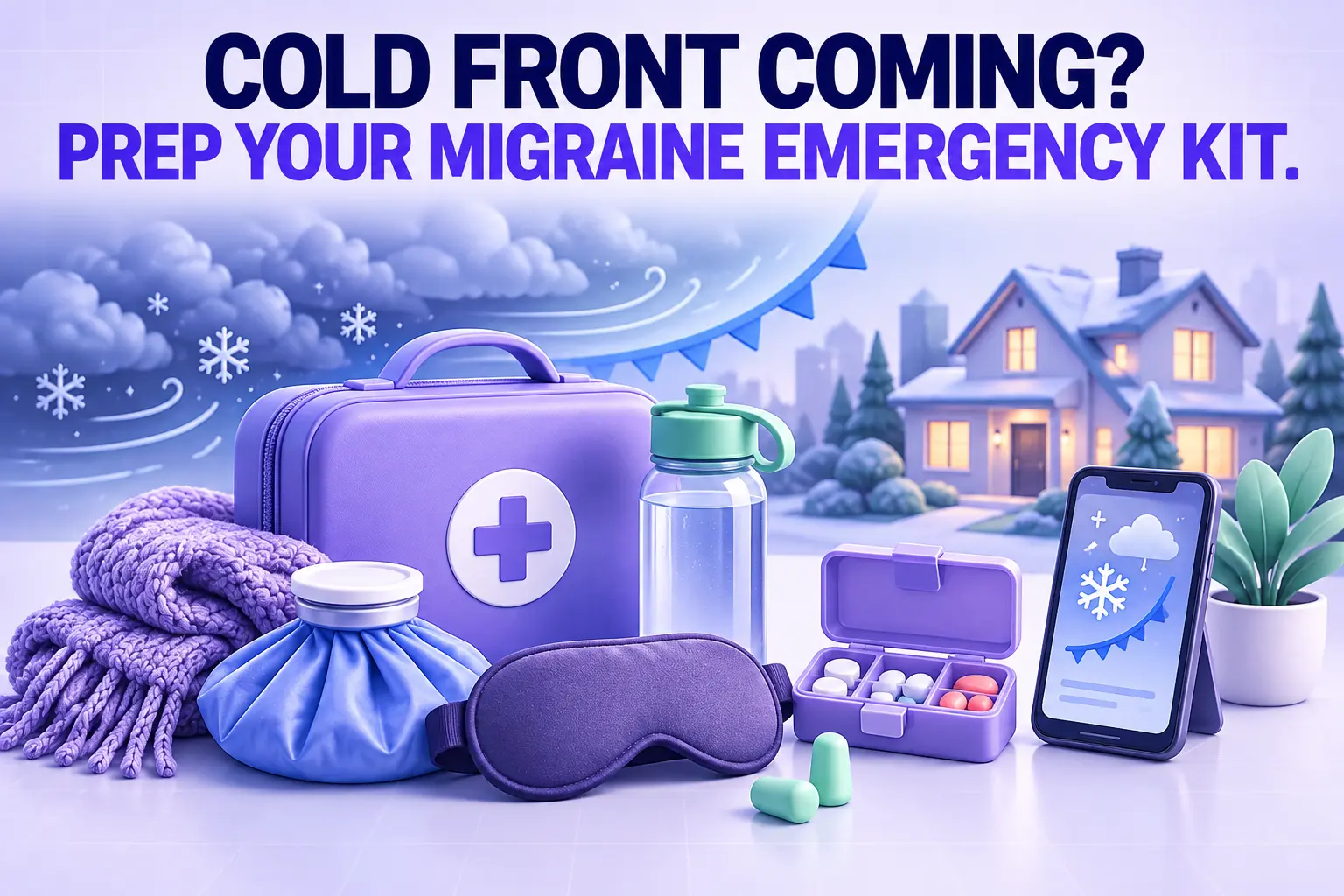
Key Takeaway: Rapid weather changes, especially cold fronts and barometric pressure drops, are well-documented migraine triggers. Preparing a migraine emergency kit in advance, including rescue medication, hydration, a dark-room setup, and a voice-logging tool, can reduce the severity of weather-triggered attacks or help prevent them entirely.
You get an alert on your phone: Significant temperature drop expected in 12 hours. For many, it just means grabbing a sweater. For someone with chronic migraines, it's the sounding of an alarm.
Rapid weather changes, particularly cold fronts and pressure drops, are notorious migraine triggers. But with the right preparation and early warning systems, you can lessen the severity of an attack or even prevent it entirely.
Here are 5 steps to prep your Migraine Emergency Kit before the cold front hits.
1. How Can Weather-Tracking Notifications Help?
The first step in preparation is knowing when to prepare. Standard weather apps tell you if it's going to rain, but they don't interpret that data for neurological risk.
Using an app like Migraine Trail, which provides Weather-Based Migraine Alerts, gives you a personalized forecast. When the app detects a significant shift in barometric pressure, it sends a notification so you aren't blindsided.
2. Why Should You Secure Your Medication in Advance?
Check your supply of abortive or rescue medications (like Triptans or NSAIDs). Do you have them in your bag? Is your prescription up to date? The key to stopping a migraine is taking medication at the earliest sign of onset. If you have to drive to the pharmacy during an attack, it's already too late.
3. Why Is Pre-Hydrating and Eating Consistently Important?
When a weather trigger is imminent, you need to eliminate other potential triggers to avoid a compounding effect.
- Drink plenty of water. Dehydration is a massive contributor to vascular headaches.
- Don't skip meals. Blood sugar drops combined with barometric pressure changes are a recipe for disaster.
4. What Should Be in Your "Dark Room" Arsenal?
If the migraine does hit, make sure your recovery space is ready:
- Put your ice hats or gel packs in the freezer now.
- Have an eye mask and earplugs accessible on your nightstand.
- Keep a bottle of water and your medication next to your bed so you don't have to get up.
5. Why Should You Switch to Voice Logging During Attacks?
During an attack, staring at an app to log your symptoms can exacerbate light sensitivity and pain. Prep your tracking method by relying on voice-logging. With Migraine Trail, you can simply say naturally what you're experiencing, and the AI will log the severity, symptoms, and the weather correlation automatically.
A cold front doesn't have to ruin your week. Proactive migraine management starts with preparation. By leveraging advanced weather notifications from a migraine tracker app and keeping your emergency kit stocked, you take back control from the forecast and find real migraine relief before the pain takes hold.
Frequently Asked Questions
Q: Why do cold fronts trigger migraines?
Cold fronts bring rapid changes in barometric pressure, temperature, and humidity. These atmospheric shifts can cause blood vessels in the brain to constrict and then dilate, activating pain-sensitive nerve fibers. The compounding effect of pressure changes, dry air, and sinus inflammation makes cold fronts a particularly potent migraine trigger.
Q: What should a migraine emergency kit include?
A migraine emergency kit should include abortive or rescue medications (such as triptans or NSAIDs), an ice hat or gel pack stored in the freezer, an eye mask, earplugs, a bottle of water, and a way to log symptoms without looking at a screen, such as a voice-logging app.
Q: How far in advance can weather-based migraine alerts warn you?
Weather-based migraine prediction tools can typically provide alerts 12 to 48 hours before a significant atmospheric change reaches your location. This advance warning gives you time to prepare your emergency kit, pre-hydrate, and have rescue medication ready.
Q: Does pre-hydrating actually help prevent weather-triggered migraines?
Dehydration is a known migraine trigger on its own. When combined with barometric pressure changes, the risk of an attack increases significantly. Pre-hydrating before a cold front helps eliminate one variable from the trigger stack, potentially keeping your overall trigger load below the threshold for an attack.
Related Reading