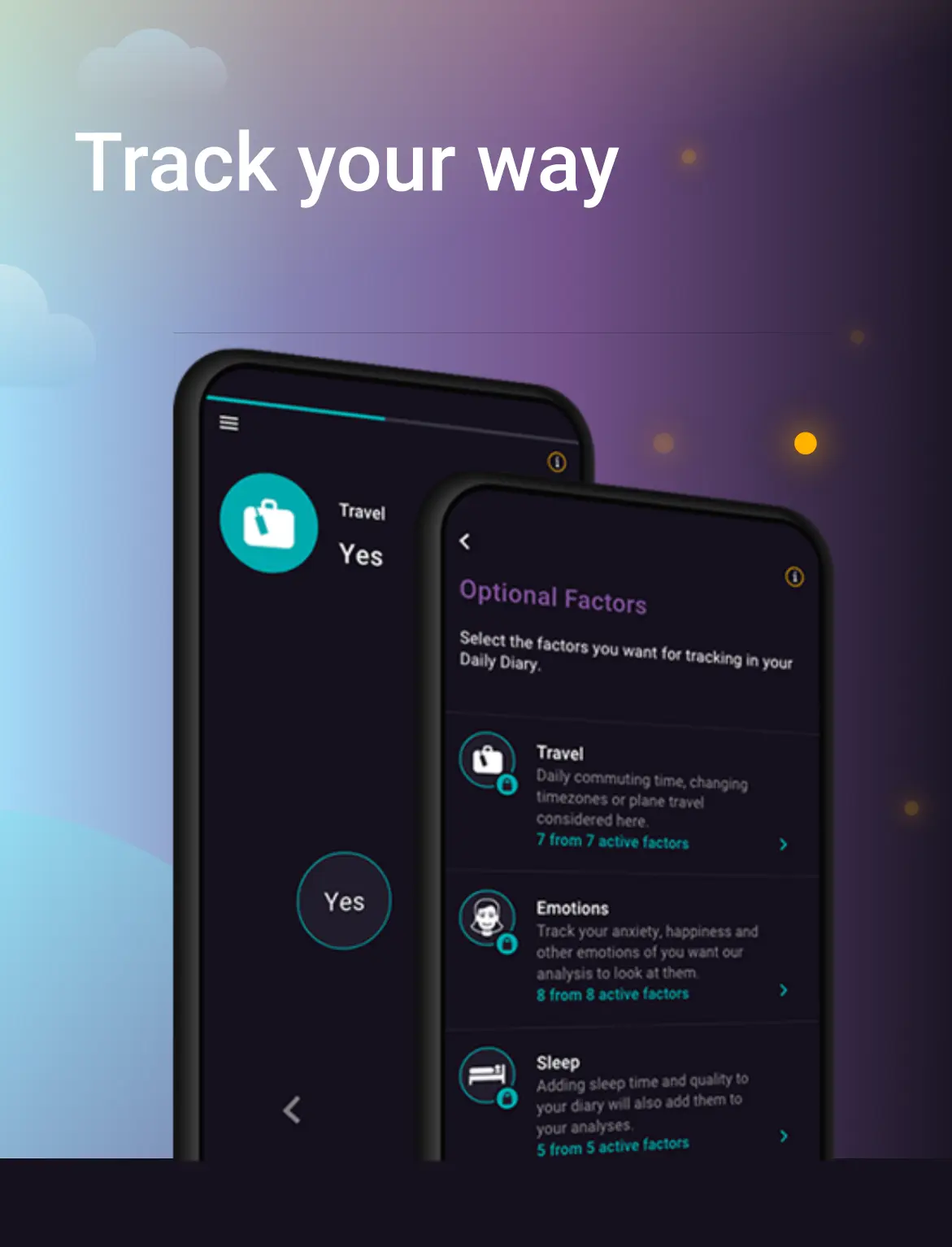
Choosing the right migraine tracker app can feel overwhelming when two top-tier options take completely different approaches to the same problem. Migraine Trail and N-1 Headache are both excellent tools for people living with chronic migraines, but they are built on fundamentally different philosophies. One prioritizes speed and simplicity through voice AI. The other prioritizes statistical rigor through manual data collection. This comparison will help you decide which approach fits your life, your pain, and your goals for migraine relief.
The Core Philosophy: Two Schools of Thought
Migraine Trail is built around one conviction: tracking should be effortless, especially when you are in pain. Its voice-powered AI lets you speak naturally during an attack, and the app handles the rest. The focus is on removing friction so you actually stick with your migraine management routine long-term.
Download Migraine Trail on the App Store to try the voice logging experience yourself.
N-1 Headache takes the opposite approach. It treats your migraine history like a personal clinical trial, applying statistical methods to determine which triggers are genuinely significant and which are coincidental. The app requires dedicated daily input, but in return it delivers p-value calculations that can separate real migraine triggers from noise.
Both philosophies have real merit. The question is which one matches the way you want to manage your health.
Feature-by-Feature Comparison
Logging Method
Migraine Trail uses voice logging as its primary input. During an attack, you tap one button and say something like: "Throbbing pain on the right side, maybe a 7, started about an hour ago. Took rizatriptan." The AI parses your natural language and automatically categorizes pain type, location, severity, onset time, and medications. There is no need to navigate menus or tap through form fields while dealing with photophobia. You can learn more about this approach in our guide to tracking migraines without looking at your screen.
N-1 Headache uses structured manual entry. You fill out detailed daily logs that cover potential triggers, symptoms, and outcomes. The granularity is impressive, but the process demands significant time and attention every single day, even on days when you feel perfectly fine. This daily commitment is necessary because the statistical engine needs consistent baseline data to calculate meaningful correlations.
Analysis Approach
Migraine Trail uses AI-driven pattern detection that runs continuously in the background. As your log history grows, the app identifies recurring combinations of factors (weather, sleep, stress, food) that precede your attacks. It surfaces these insights proactively through risk scores and forecasts, giving you practical warnings before an attack materializes.
N-1 Headache applies formal statistical testing with p-values and confidence intervals. After weeks of consistent data entry, the app calculates whether a suspected trigger (say, red wine or poor sleep) has a statistically significant association with your attacks. This is the same methodology used in clinical research, and it produces highly defensible conclusions for patients who want scientific certainty.
Weather Tracking
Migraine Trail integrates weather data automatically via your phone's GPS. It pulls barometric pressure, temperature, and humidity in real time and overlays this information against your attack history. The app also provides a 14-day migraine risk forecast based on incoming weather patterns. Read more about how weather connects to migraines and barometric pressure's role in headaches.
N-1 Headache does not include built-in weather tracking. If you suspect barometric pressure is a trigger, you would need to manually record weather conditions in your daily log or cross-reference your data with a separate weather app.
Doctor Reports
Migraine Trail generates clean, shareable PDF reports with a single tap. These reports include your MIDAS disability score, attack frequency trends, medication efficacy rates, and ranked trigger correlations. They are specifically formatted for the typical 15-minute neurologist appointment. See our article on presenting migraine data to your neurologist for tips on making the most of these reports.
N-1 Headache provides detailed statistical output that you can export and share. The raw data and p-value tables are extremely thorough, but they may require some explanation for doctors who are not familiar with the app's specific statistical methodology.
Learning Curve
Migraine Trail is designed to be intuitive from the first launch. Voice logging requires zero training. The app handles categorization, and you can review and adjust entries afterward if needed. Most users are fully comfortable within a day. For a walkthrough, check our step-by-step guide to Migraine Trail.
N-1 Headache has a steep learning curve. Understanding what data to enter, how to interpret p-values, and how to design your personal tracking "experiment" takes real effort. The payoff is substantial for those who invest the time, but many casual trackers abandon the process before reaching statistically meaningful results.
Data Privacy
Migraine Trail stores health data on your device with encrypted cloud sync. The app does not sell or share personal health information with third parties.
N-1 Headache also prioritizes data privacy, keeping your information local on your device. Both apps take a responsible approach to sensitive health data.
Who Should Pick Which App?
Choose Migraine Trail If You:
- Want the fastest, lowest-friction way to log attacks
- Struggle with screen sensitivity during migraines
- Value automatic weather-based risk predictions
- Need polished reports for doctor appointments
- Prefer AI that works in the background without daily effort
- Are looking for a migraine tracker app that fits naturally into a busy life
Get Migraine Trail from the App Store and start logging in seconds.
Choose N-1 Headache If You:
- Want clinical-grade statistical proof of your specific triggers
- Are comfortable with daily manual data entry, even on pain-free days
- Have a scientific or analytical mindset and enjoy interpreting data
- Are willing to invest weeks of consistent tracking before seeing results
- Do not need automatic weather integration or voice logging
The Bottom Line
These two apps serve genuinely different needs. N-1 Headache is a powerful research tool for the data-driven patient who wants statistical certainty. Migraine Trail is the modern, AI-powered tracker for anyone who wants effortless logging, predictive insights, and practical migraine relief without the burden of daily data entry.
For most people living with chronic migraines, the biggest challenge is not analysis. It is consistency. The best tracker is the one you actually use every single time an attack hits. Migraine Trail's voice-first design removes the barriers that cause people to stop tracking, which ultimately leads to better data, better insights, and better outcomes.
Ready to track your migraine triggers the easy way? Download Migraine Trail and experience the difference voice AI makes in your migraine management.
Keep Reading