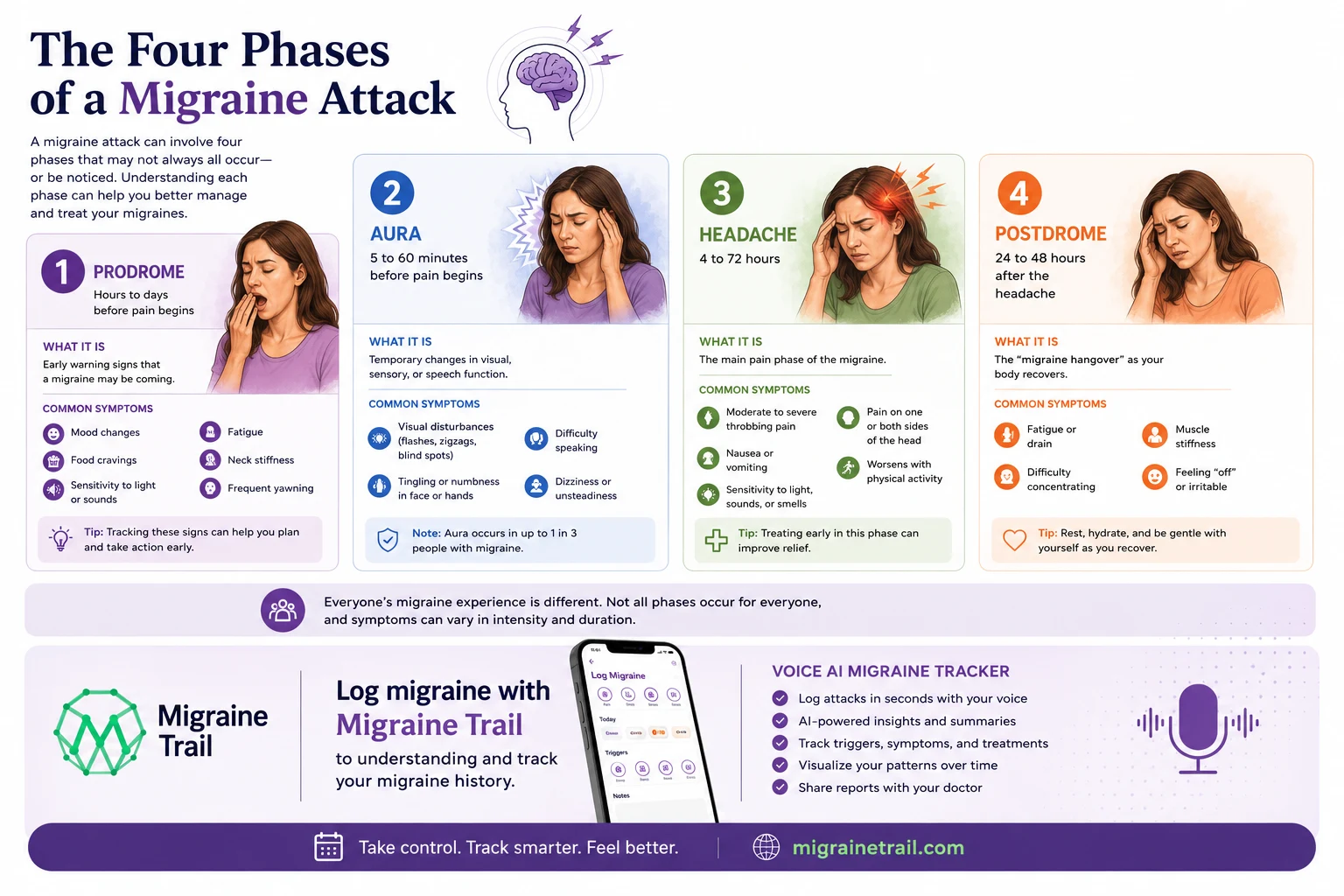
Feeling cold, shivery, clammy or flushed during a migraine is a recognised part of the attack. Migraine involves the autonomic nervous system — the system that regulates sweating, blood vessel tone and skin temperature — and at least one cranial autonomic symptom is reported by around 74% of people with migraine. Facial sweating and facial flushing appear specifically in the research at roughly 25% and 17.5%. So this is common and expected, rather than a sign something unusual is happening.
The important caveat is that chills plus fever is a different situation entirely, and this article does not cover it.
What the Autonomic Research Shows
A study of cranial autonomic symptoms in migraine — prevalence, phenotype and laterality found at least one such symptom in 74% of people, and identified two potentially new symptoms beyond the classically listed ones.
An observational study of cranial autonomic symptoms ranked them: lacrimation (45.5%), conjunctival injection (34.5%) and eyelid oedema (34%) most common, followed by facial sweating (25%), facial flushing (17.5%), nasal congestion (9%), rhinorrhoea (5%) and ptosis (4%).
There is also evidence that cranial autonomic symptoms in migraine relate to central sensitization — the same process underlying allodynia, where the nervous system becomes more reactive during an attack.
Why "Chills" Specifically
Note what the studies measure: facial sweating and flushing are documented with numbers. Generalised chills and shivering are more often described by patients than formally quantified in these particular datasets, so be appropriately careful about how much weight the evidence carries for that specific symptom.
What is well established is the mechanism that makes it plausible. Migraine involves the hypothalamus — which regulates body temperature as well as sleep-wake cycling — and the trigeminal-autonomic reflex. A condition that engages both is entirely capable of producing the sensation of feeling cold, sweating, or swinging between the two.
The honest summary: facial autonomic symptoms are well documented with prevalence figures; the whole-body cold-and-shivery experience is commonly reported and mechanistically plausible, but less precisely measured.
Chills With Fever Is a Different Question
This is the part that matters most. Migraine does not cause fever. If you have chills with a raised temperature, the question is no longer migraine — it is what infection is present, and specifically whether it might be meningitis when a headache is also involved.
Rigors — violent, uncontrollable shaking — with fever are a red flag for serious infection and need urgent care, not a migraine explanation.
When Chills and Sweating Need Urgent Care
Seek emergency care for chills or shivering with fever and headache, especially with neck stiffness, a rash that does not fade when pressed, sensitivity to light, drowsiness or confusion — this combination can indicate meningitis. Seek urgent care for rigors, for drenching night sweats over weeks, for sweating with chest pain, breathlessness or palpitations, or for a headache with fever after recent travel. New sweating episodes with unexplained weight loss, or a headache unlike your usual pattern, warrant prompt medical review.
This article is educational and is not a substitute for individual medical advice.
What to Track
| Field | Why |
|---|---|
| Temperature taken? | The single most useful field — separates migraine from infection |
| Chills, sweating, or both | They can alternate within one attack |
| One-sided facial sweating or flushing? | The documented cranial autonomic pattern |
| Timing within the attack | Premonitory, peak pain, or postdrome |
| Other autonomic symptoms | Watering eye, blocked nose, ear fullness |
Take your temperature. It sounds trivial and it is the row that does the most work: a normal temperature with chills during a known migraine pattern is reassuring, and a raised one changes the situation entirely.
The symptom checker covers associated symptoms alongside headache features. If these symptoms recur, logging them across attacks shows whether they are a consistent part of your pattern — which is exactly what makes them unremarkable rather than alarming.
Sources