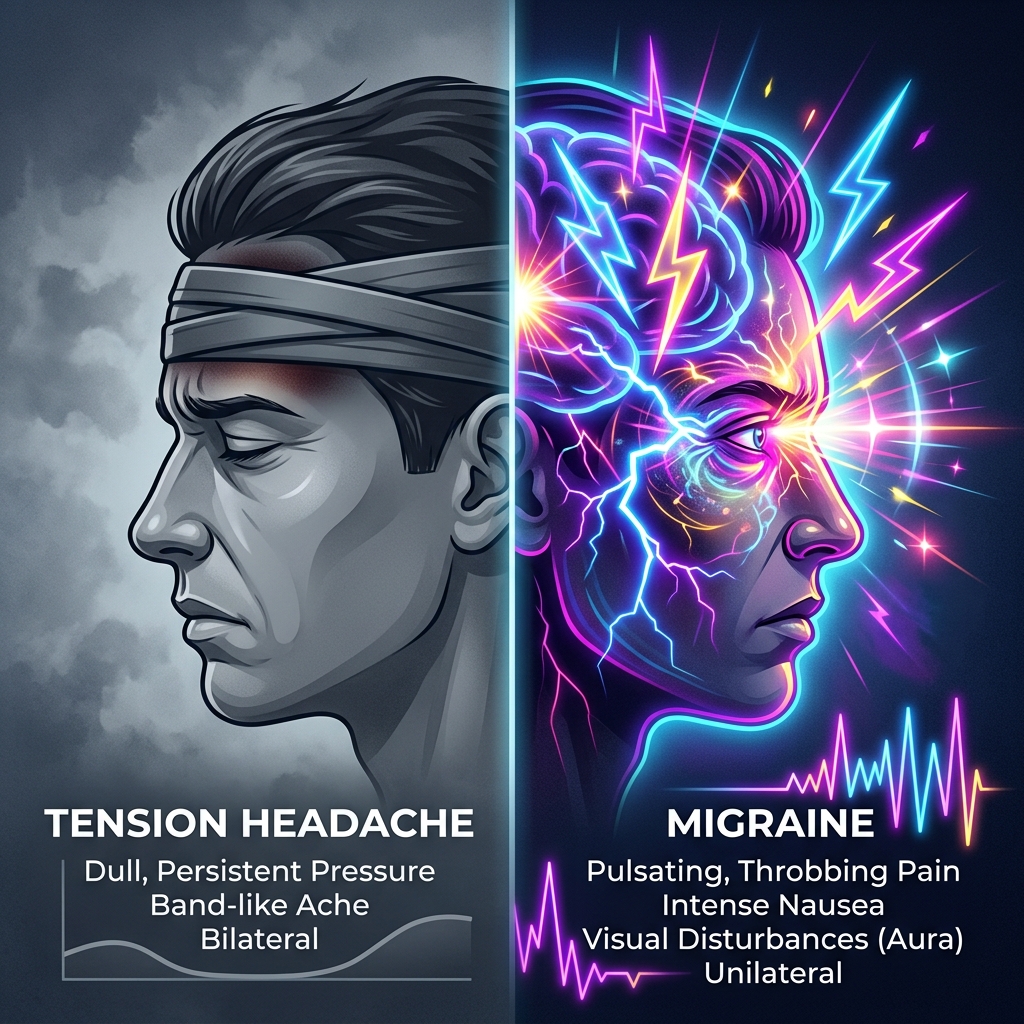
Key Takeaway: The primary difference between a migraine and a standard headache lies in the associated symptoms. A tension headache is typically a dull, bilateral pressure. A migraine is a neurological event often characterized by pulsating pain on one side of the head, accompanied by nausea, and sensitivity to light and sound. Knowing which one you have is the first step toward effective relief.
When you have pain in your head, your first instinct is to reach for a painkiller. But is it a simple tension headache or a complex migraine attack? The answer determines whether an over-the-counter pill will work or if you need a more specific medical intervention.
Understanding the difference is critical. Using a headache tracking app like Migraine Trail can help you track these nuances and provide better data for your doctor.
The Common Tension Headache
Most headaches people experience are "tension-type" headaches. These are usually caused by stress, poor posture, or muscle strain.
- Pain Quality: A dull, aching sensation. It feels like a tight band is wrapped around your forehead.
- Location: Usually bilateral, meaning it affects both sides of the head.
- Intensity: Generally mild to moderate. You can usually go about your day, albeit with some discomfort.
- Associated Symptoms: None. Tension headaches do not typically cause nausea, vomiting, or light sensitivity.
The Complex Migraine Attack
A migraine is not just a "bad headache." It is a neurological disease. While a headache is a symptom, a migraine is a condition.
- Pain Quality: Throbbing or pulsating pain. It feels like a heartbeat in your head.
- Location: Often unilateral, meaning it affects only one side of the head, though it can switch sides or become bilateral.
- Intensity: Moderate to severe. Migraines are frequently debilitating, requiring you to lie down in a dark, quiet room.
- Associated Symptoms: This is the defining factor. Migraines often come with:
- Nausea and vomiting
- Extreme sensitivity to light (photophobia)
- Extreme sensitivity to sound (phonophobia)
- Visual disturbances (aura)
Comparison Table: Headache vs. Migraine
| Feature | Tension Headache | Migraine Attack |
| :--- | :--- | :--- |
| Pain Level | Mild to Moderate | Moderate to Severe |
| Pain Quality | Dull, steady ache | Throbbing, pulsating |
| Location | Both sides (bilateral) | Often one side (unilateral) |
| Duration | 30 mins to several days | 4 to 72 hours |
| Nausea/Vomiting | Rare | Common |
| Light/Sound Sensitivity | Rare | Very common |
| Triggers | Stress, posture | Foods, weather, hormones, sleep |
Why the Distinction Matters
Treating a migraine as a tension headache is often ineffective. Standard NSAIDs might take the edge off, but they won't address the neurological cascade involved in a migraine attack. Conversely, many migraine-specific medications (like triptans) only work if taken early in the migraine cycle and will do nothing for a standard tension headache.
Furthermore, if you suffer from chronic migraines, you may need preventive treatment that a standard headache sufferer does not require.
Tracking for Clarity
If you're unsure which one you're experiencing, start logging your symptoms. The Migraine Trail app allows you to categorize your pain and log associated symptoms like light sensitivity or nausea during each entry.
With voice logging, you can record these details even when you're in the middle of an attack, ensuring you don't miss any critical patterns that could lead to a better diagnosis.
Frequently Asked Questions
Q: Can a headache turn into a migraine?
Yes. A tension headache can act as a trigger for a migraine in some individuals. This is often referred to as a "transformed migraine" or a "mixed headache."
Q: Is sinus pain always a sinus headache?
Actually, the majority of self-diagnosed "sinus headaches" are actually migraines. If your sinus pain is accompanied by nausea or light sensitivity, it's likely a migraine.
Q: Why do migraines only happen on one side?
While not fully understood, it's believed to be related to the activation of the trigeminal nerve on one side of the brain. The pain can, however, shift or involve the whole head as the attack progresses.
Q: Can children get migraines?
Yes, children and even infants can experience migraines. In children, the pain is often bilateral and the attacks are shorter than in adults. Learn more about migraines in children and teens.
Keep Reading